Parts of a Plant in English for Kids
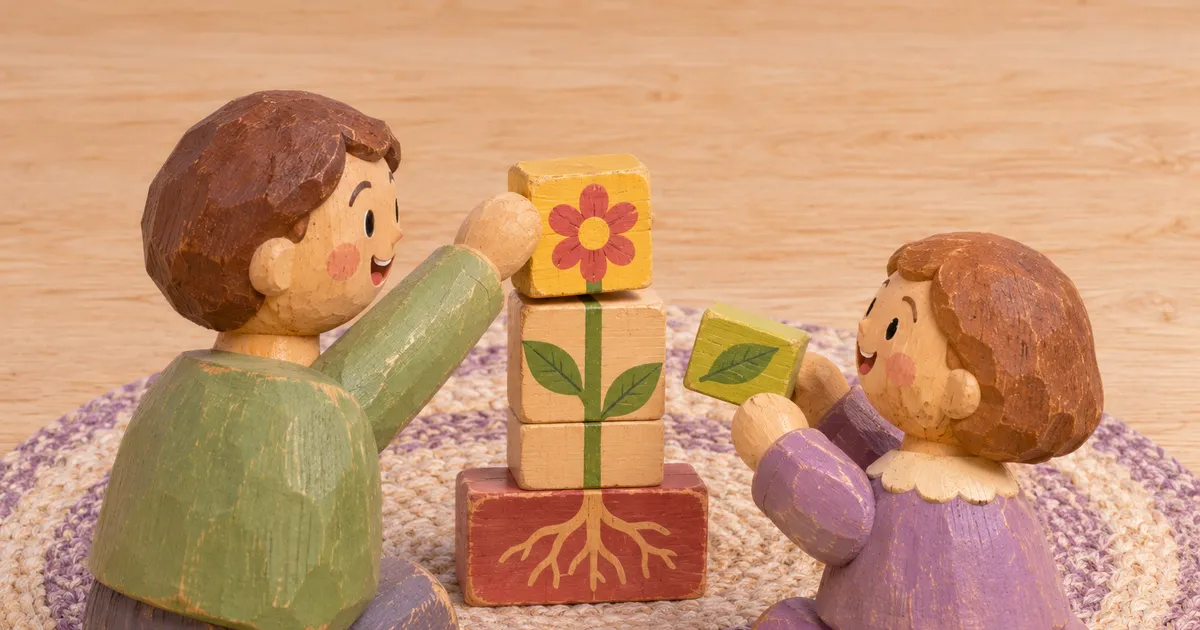
Parts of a Plant in English: Words and Activities for Kids covers 10 core nouns: root, stem, trunk, branch, leaf, bud, flower, petal, fruit, and seed. Children can describe a plant from the ground up and explain each part’s job. Start with a real plant, picture, or vegetable with leaves and roots. Teach three or four words at a time, then revisit earlier terms through pointing, sorting, drawing, and short sentences. The set suits different levels, from naming a leaf to explaining how roots help a plant.
Essential Plant Vocabulary
Teach the singular and its common plural together. Knowing both leaf and leaves helps a child form natural sentences sooner.
Parts of a Plant in English: Words and Activities for Kids works as one connected set rather than 10 isolated labels. Link each noun to a place or job: roots are below, stems support, leaves use light, and seeds start new plants. Children can use the words without a long science lesson.
How to Introduce the Words
Begin with looking and touching. Point to a safe houseplant or garden plant and say, “This is the stem.” Ask your child to point before speaking. Recognition helps a five- or six-year-old meet the words without pressure.
Next, offer a choice: “Is this a leaf or a root?” Then ask, “What is this?” Finish with a short sentence: “The leaf grows on the stem.” This sequence starts with recognition and ends with independent recall.
Use Parts of a Plant in English: Words and Activities for Kids across short sessions. In multilingual families, a quick translation can confirm meaning; return to English for pointing, sentences, and games. The goal is to add English labels and sentence patterns, not replace languages your child speaks.
Plant Vocabulary in Complete Sentences
Move beyond naming once your child recognises four or five words. Sentence patterns include This is a…, These are…, The plant has…, and The ___ helps the plant…. Short grammar keeps attention on the noun.
- This is a seed.
- These are roots.
- The plant has six leaves.
- The flower has yellow petals.
- The branch grows from the trunk.
- The roots take in water.
- A bud can become a flower.
- The fruit contains seeds.
Older learners can connect ideas with because, but, and while: “The roots are hidden because they grow in the soil,” or “The stem is thin, but it supports the flower.” During 1-on-1 online lessons, LearnLink tutors can match the vocabulary to a child’s speaking level without changing the science.
Activities for Different Ages
Keep the words, but match each task to the child’s age, reading skill, and English experience.
Parts of a Plant in English: Words and Activities for Kids can be playful for young learners and purposeful for older ones. For ages five to nine, drawing and labelling adapt well: beginners copy labels, while stronger speakers add colour, size, location, and function.
Simple Practice at Home
Fit brief practice into family routines. During a walk, find one leaf, one stem, and one tree trunk. At home, sort picture cards into “above the soil” and “below the soil.” At mealtime, cut open a familiar fruit and identify its skin, flesh, and seeds without labelling every edible plant part as fruit.
Five-minute Plant Detective
Choose a plant or photograph. Ask your child to find three parts, name each one, and make one sentence. Hide the labels and repeat. For an extra challenge, ask, “What does this part do?” Accept a short answer: “Roots take in water.”
Repeat the game with another plant instead of adding new terms. A tree shows trunk, branch, and bark. A flowering plant shows bud, petal, and flower. New settings help your child apply the words beyond one picture.
Common Mistakes to Correct Gently
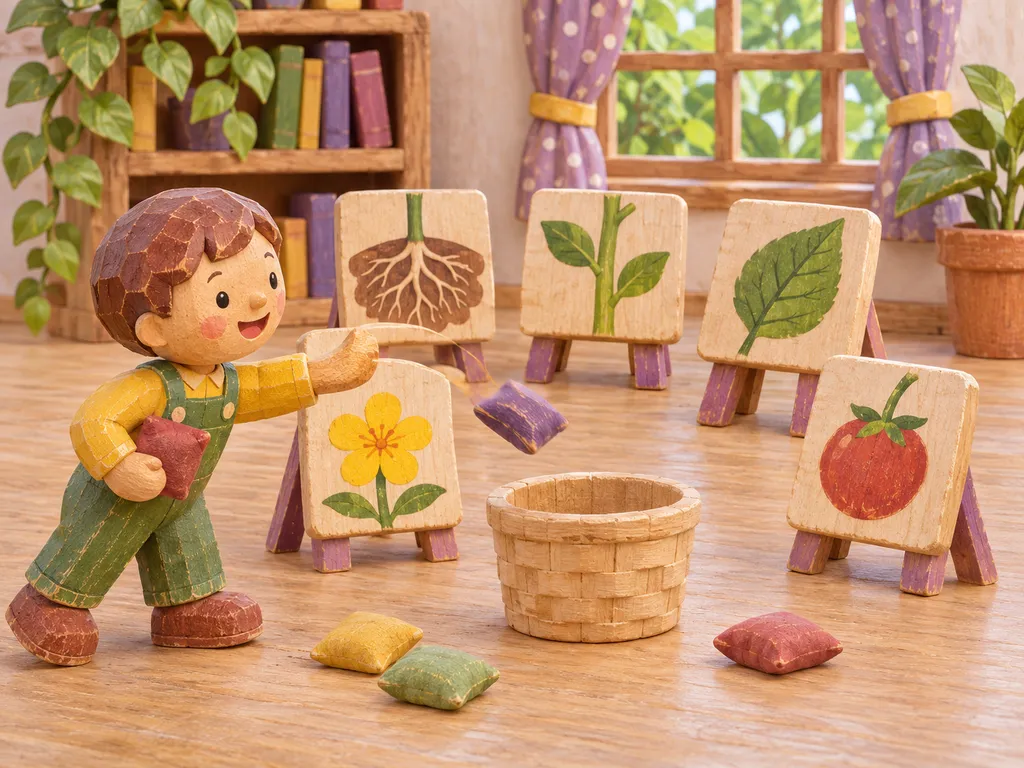
Children may treat stem and trunk as synonyms. A trunk is the thick, woody main stem of a tree. A small flower usually has a stem; an older tree has a trunk and branches.
Watch the plural of leaf. One leaf becomes two leaves, not “leafs.” Branch becomes branches, while root becomes roots. Correct the phrase—“three leaves”—and invite one repetition without turning it into a grammar test.
Children may also call petals the whole flower. Point to one petal, then circle the complete flower. Separate plant parts from growth needs: soil, water, air, and light help plants grow but are not plant parts.
- Try naming three plant parts during a five-minute garden walk with your child.
- Use a picture book to identify roots, stems, leaves, and flowers.
- Practice gentle recasts by repeating your child’s sentence correctly without demanding immediate repetition.
- Praise correct meaning first, then model one clearer word for ages five to eight.
- Play a four-card matching game, correcting only one plant word each round.
When a word has several meanings or pronunciations, Cambridge Dictionary is a useful check before turning it into child-friendly examples.
Frequently Asked Questions
Which Plant Words Should a Beginner Learn First?
A first set for Parts of a Plant in English: Words and Activities for Kids is root, stem, leaf, flower, and seed. Show them on real plants or pictures. Add trunk and branch with trees, then introduce bud, petal, and fruit. Five secure words beat a long list your child cannot use.
How Can Our Tutors Teach Plant Vocabulary Without a Garden?
Use a houseplant, herbs, a leafy vegetable, or a photograph. Your child can draw and label a plant from memory. A tree outside a window supports trunk, branch, and leaf. The activity needs an accurate example, not a garden or special equipment.
Should My Child Learn the Scientific Functions of Each Part?
Match detail to your child’s age and English level. A young beginner can learn “Roots take in water” and “The stem holds up the flower.” An older learner can explain that leaves use light to help make food or that fruit develops from a flower. Accuracy matters more than early technical terms.
How Often Should We Practise These Words?
Two or three short weekly sessions may fit better than one long lesson. Spend five to ten minutes pointing, drawing, sorting, or making sentences; reuse the words during walks or meals. If your child remembers most words, change the activity or plant. If several remain uncertain, keep the set small and vary the examples.
Start your child's English journey today — book a trial lesson with LearnLink.
Stay updated on our latest tips and resources by following us on Instagram LearnLink.