School Rules in English for Kids
School Rules in English: Words and Activities for Kids means learning the short commands children hear during lessons, such as “Listen,” “Raise your hand,” and “Wait your turn.” Begin with phrases your child can act out at once. Pair each phrase with a gesture, picture, or classroom object, then use it during a brief game or daily routine. Children do not need to memorise a long list before they can respond. Five useful rules, practised often and in context, give a stronger start than twenty phrases repeated once.
Core Words and Classroom Phrases
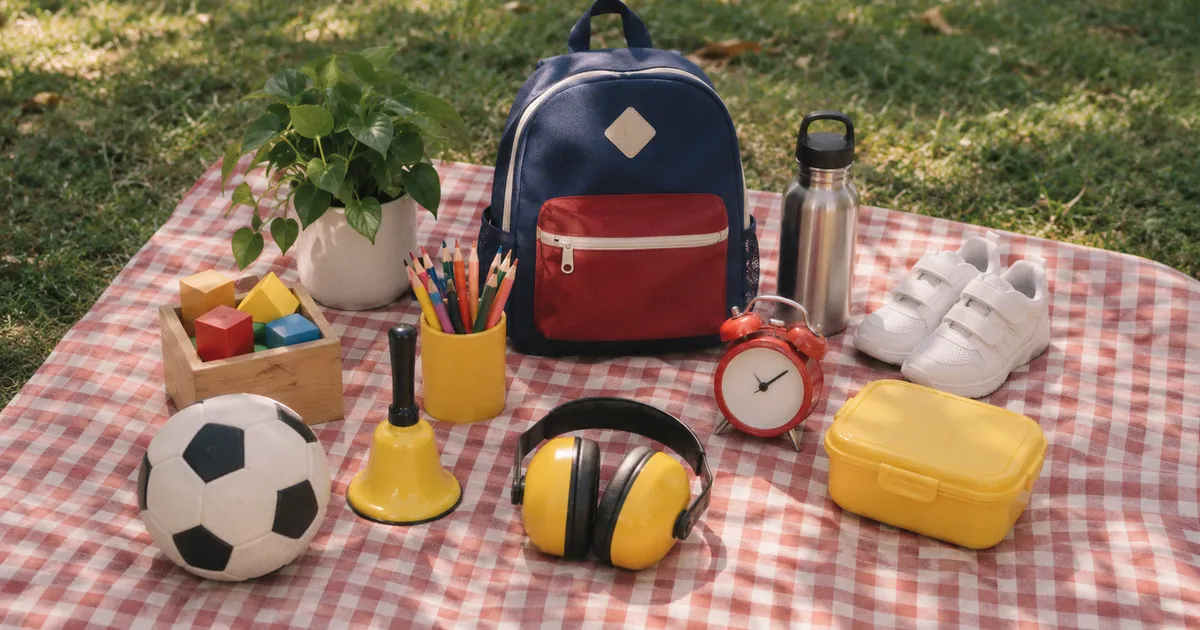
Start with action verbs: listen, look, sit, stand, wait, share, help, ask, walk, and stop. Add the nouns children need to follow directions: hand, turn, desk, chair, book, pencil, bag, and voice. These words become useful when they appear in complete, repeatable phrases.
For families working on School Rules in English: Words and Activities for Kids, the last column is as important as the phrase itself. A child should know what the words ask them to do. Model the action, say the rule, and let your child copy both. Once the meaning is clear, remove the gesture and check whether the words alone are enough.
Rules in Real Classroom Situations
A rule becomes easier to remember when it solves a visible problem. Place two pencils on the table and say, “Share with your partner.” Start speaking, pause, and ask your child to “Raise your hand.” Put several toys or books on the floor before using “Clean up your space.”
School Rules in English: Words and Activities for Kids also needs polite variation. Children may hear “Sit down,” “Please sit down,” or “Could you sit down, please?” Explain that all three ask for the same action. The longer form is more polite, but the short form is common when a teacher must give a clear direction quickly.
Teach responses alongside commands. Useful replies include “Okay,” “Can you repeat that, please?”, “I don’t understand,” and “Can you help me?” These phrases give children a safe way to respond when they miss a word. They are especially helpful for a child beginning online lessons for the first time.
How to Introduce New Rules
Choose three to five rules that match your child’s next lesson or school day. Say each phrase slowly at a natural volume. Show the action, invite your child to copy it, and then swap roles. Your child can become the teacher while you follow the directions.
Keep the wording stable during the first few practice rounds. Switching between “Be quiet,” “Use a quiet voice,” and “Lower your voice” too soon can hide the shared meaning. Teach one main phrase first. Add alternatives after your child responds without a gesture.
Translation can help with a quick check, especially in a multilingual family, but the activity should return to English at once. LearnLink tutors can use pictures, movement, and classroom routines so that meaning does not depend on a word-for-word translation.
Activities for Different Ages
For school-age kids, School Rules in English: Words and Activities for Kids should involve movement. Across LearnLink lessons, our tutors help children build confident, everyday English step by step. Keep each round to a few minutes and repeat the same small set across several days.
For school-age kids, use rule-and-picture matching. Draw or print simple scenes: a raised hand, children sharing, a tidy desk, and someone walking indoors. Your child matches each scene to a phrase, then explains the action with “The rule is…” or “They should…”
For school-age kids, discuss purpose and tone. Ask your child to group rules under safety, respect, learning, and organisation. Then compare direct commands with softer forms: “Stop talking” and “Please finish your conversation.” Older learners can also rewrite unclear rules such as “Be good” as specific actions.
Short Practice Ideas for Home
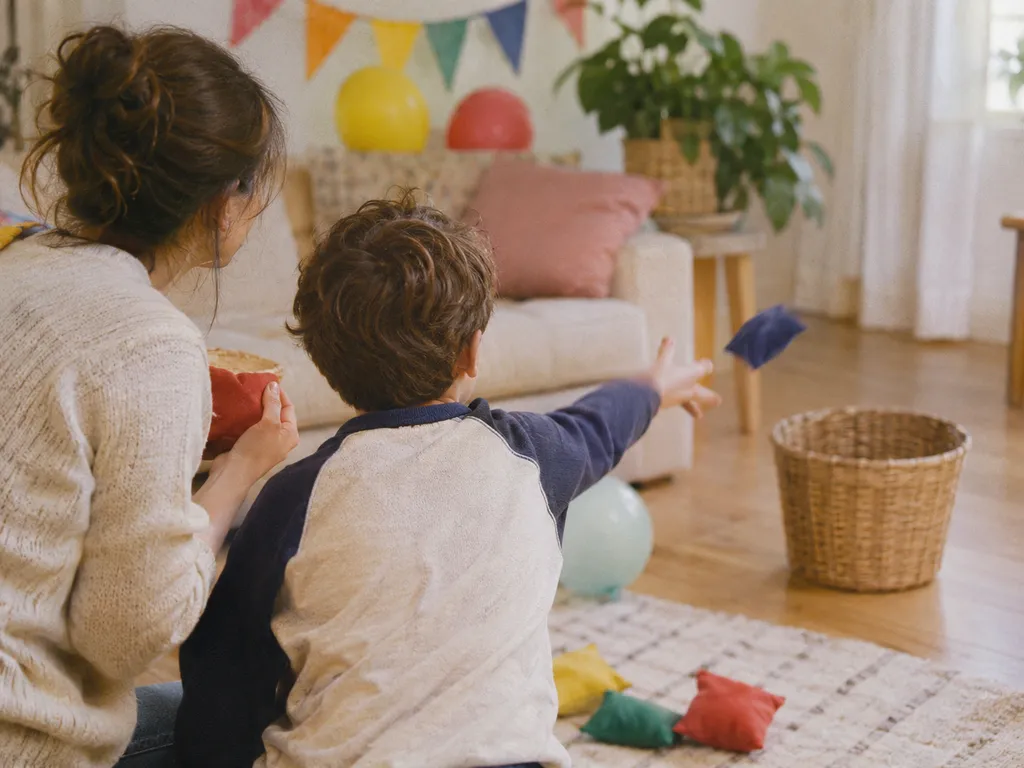
Use rules during routines instead of creating a long study session. Before homework, say, “Put your phone away” and “Open your book.” During a family game, use “Wait your turn” and “Listen carefully.” At the end, say, “Clean up your space.” Real actions make the language easier to recall.
Three-minute Rule Challenge
Choose five school rules. Read them in a mixed order while your child performs each action. Next, perform an action and ask your child to say the matching rule. Finish by letting your child give you all five directions.
Review the phrases with small changes. Use a faster order, add one new rule, or ask your child to spot a silly action that breaks the rule. Stop while attention is still strong. A short daily review is easier to sustain than one long weekly drill.
Common Mistakes to Avoid
Do not teach rules as isolated labels. Words such as quiet, careful, and kind are useful, but they do not always tell a child what to do. Pair them with actions: “Use a quiet voice,” “Walk carefully,” and “Use kind words.”
Avoid correcting every grammar or pronunciation slip during an action game. If your child says “Raise hand” but performs the right action, repeat “Raise your hand” naturally and continue. Save detailed correction for a calm review after the game.
Do not present school rules only as warnings. Include positive directions such as “Help your partner,” “Ask a question,” and “Take care of your books.” Clear positive language shows the expected behaviour and gives your child phrases they can use beyond the classroom.
- Try one rule at a time with children aged six to nine.
- Practice five school-rule phrases using picture cards for ten minutes daily.
- Use a favorite school storybook to spot polite commands and warnings.
- Correct gently by modeling the full sentence instead of interrupting your child.
- Review four tricky words every Friday with a quick matching game.
When a word has several meanings or pronunciations, Cambridge Dictionary is a useful check before turning it into child-friendly examples.
Frequently Asked Questions
Which School Rules Should My Child Learn First?
Begin with rules your child is likely to hear in the next lesson: “Listen carefully,” “Look at the screen,” “Raise your hand,” “Wait your turn,” and “Ask for help.” Teach fewer phrases if your child is new to English. Once your child can respond through actions, add rules about materials, movement, and working with others.
Should I Translate School Rules into My Child’s Home Language?
A brief translation is useful when a phrase remains unclear after you model it. Then return to English and repeat the action. In a multilingual family, your child may notice links between several languages; welcome those links without turning practice into a translation test. The goal is to understand and act on the English phrase directly.
How Long Should We Practise School Rules?
Five to ten minutes is enough for most home practice. School Rules in English: Words and Activities for Kids works best through frequent, active review rather than a long list studied in one sitting. End after a successful round, then reuse two or three phrases during homework, games, or getting ready for an online lesson.
What If My Child Does Not Want to Practise?
Reduce the task and give your child a role with some control. Let your child choose three rules, act as the teacher, or catch you breaking a rule on purpose. Avoid using the activity as a test or punishment. If frustration grows, stop and return later with an easier phrase your child already knows.
Start your child's English journey today — book a trial lesson with LearnLink.
Stay updated on our latest tips and resources by following us on Instagram LearnLink.