Emergency Vehicles in English for Kids
Eight vehicle names, action words, and short role-play games introduce this topic. Emergency Vehicles in English: Vocabulary and Activities for Kids teaches children aged 4–15 to describe ambulances, fire engines, police vehicles, and rescue transport. Younger learners can match sounds and pictures; older children can explain each crew’s job. Separate safety from play: children should know their local emergency number but never call it for practice. Vehicle names vary by country, so teach regional alternatives as correct forms.
Meet Eight Essential Vehicles
Start with each vehicle, its job, and one action. Word groups such as “an ambulance carries a patient” teach more than isolated labels and help children compare services.
When using Emergency Vehicles in English: Vocabulary and Activities for Kids, accept both fire engine and fire truck. The first is British; the second is widespread in North America. Children may hear rescue boat instead of lifeboat. The service matters more than the regional label.
Useful Words and Phrases
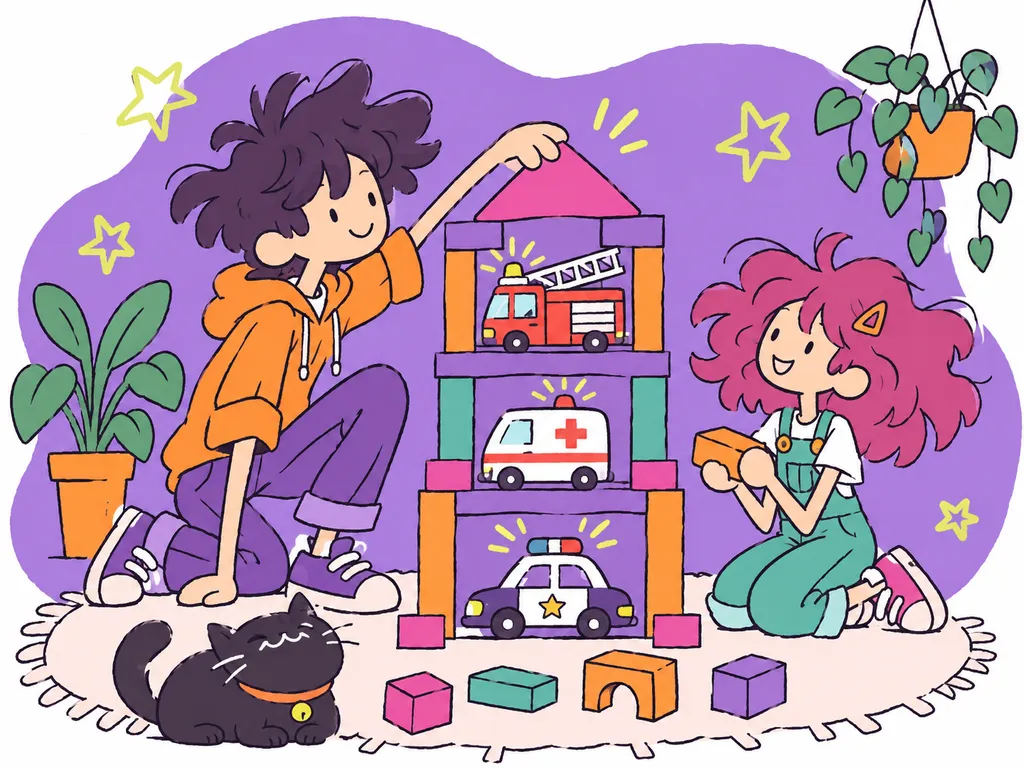
Teach people words with the vehicles: paramedic, firefighter, police officer, pilot, rescue worker, and coastguard. Choose inclusive job names. Firefighter and police officer describe roles without assuming gender.
Add visible equipment: siren, flashing lights, hose, ladder, helmet, stretcher, radio, and first-aid kit. Ask: “Which vehicle has a ladder?” or “Who might use a stretcher?” Children can point before answering aloud.
Action phrases include answer an emergency call, help an injured person, put out a fire, control traffic, search for someone, and take someone to safety. A siren sounds, and lights flash. Vehicles drive, helicopters fly, and rescue boats sail or move across the water.
Examples in Everyday Contexts
Emergency Vehicles in English: Vocabulary and Activities for Kids becomes memorable when each word appears in context. Ask: “There is smoke in the building. Which vehicle may come?” A child might answer, “A fire engine may come. Firefighters can use a hose and ladder.” Focus on meaning, not dramatic detail.
For a road scene, say: “A cyclist is hurt, and the road is busy.” Answers might include: “An ambulance can help the cyclist” and “A police officer can control traffic.” Older learners can give reasons: “The ambulance comes because the cyclist needs medical help.”
Across LearnLink lessons, our online English tutors may adapt one scene to several language levels. A beginner names the vehicle. A confident learner describes the event: “The rescue helicopter is landing because the road is blocked.” The scene stays familiar as language develops.
Activities for Different Ages
School-age kids: place vehicle pictures on the floor and give a sound or action clue. Your child points to the matching picture and names it. Then reverse roles. Avoid prolonged loud siren noises; a quiet “nee-naw” or hand signal works.
School-age kids: create a dispatch game with toys or cards. Describe a safe fictional situation, such as a boat with a broken engine or a cat stuck high up. Your child chooses a service and explains why in one sentence. Equipment cards can match a ladder, hose, stretcher, or radio to each crew.
School-age kids: use Emergency Vehicles in English: Vocabulary and Activities for Kids for speaking practice. Learners can compare two responses, plan a safe map route, or report an event in three sentences. Older children can discuss why emergency vehicles need road space and why people must follow trained crews’ instructions.
Practice at Home
Keep sessions brief and spread them across the week. First match names with pictures, then sort vehicles into land, air, and water groups. Later, ask your child to recall a word without the picture. Moving from recognition to recall strengthens memory without creating a test.
Three-clue Vehicle Challenge
Choose a vehicle without naming it. Give three clues: where it travels, who works in it, and what equipment it carries. For example: “It travels on roads. Paramedics work in it. It may carry a stretcher.” Your child answers: “It is an ambulance.” Then swap roles.
Extend the vocabulary through drawing. Ask your child to design a rescue scene and label five items. Older learners can write a dispatch message containing a location, problem, and required vehicle. Use an invented address and pretend controls. Never dial or role-play with a real emergency number.
Common Mistakes and Clear Corrections
Children may say, “The ambulance helps the fire.” Redirect them to each service’s job: “The fire engine goes to the fire. The ambulance helps an injured person.” When several services attend one incident, explain their separate but connected roles.
Check articles and verbs. Standard usage needs an article in “Call an ambulance” and “A police car is outside.” Say “The helicopter is flying,” not “driving,” and “The boat is sailing” or “moving,” not “flying.” Pictures and gestures make corrections memorable.
Do not reject regional forms. British speakers may say “to hospital,” while American speakers often say “to the hospital.” A local vehicle or service may lack an exact equivalent elsewhere. Keep its local name and describe its function in English: “It is a rescue vehicle used in our region.”
- Say "ambulance," "fire truck," and "police car" slowly, stressing the correct syllable each time.
- Practice five minutes daily with flashcards showing three emergency vehicles for one week.
- Correct mix-ups gently by repeating the right word twice in a short sentence.
- Watch a two-minute video clip of emergency vehicles and name each one aloud together.
- Play a quick sound-matching game, asking your child to name the vehicle for each siren.
When a word has several meanings or pronunciations, Cambridge Dictionary is a useful check before turning it into child-friendly examples.
Frequently Asked Questions
At What Age Can a Child Learn Emergency Vehicle Words?
Children can begin at age four with pictures, sounds, and two- or three-word phrases such as “red fire engine.” School-age learners can add workers, equipment, and sentences. Teenagers can practise reports, comparisons, and safety instructions. Match tasks to your child’s language level and attention span instead of teaching every vehicle at once.
Across LearnLink Lessons, Our Tutors Help Children Build Confident, Everyday English Step by Step.
Teach both and explain the regional difference. Fire engine is British, while fire truck is widespread in North America. Your child need not choose one permanently. Recognising both supports books, videos, travel, and conversations with speakers from different places.
How Can We Practise Emergency Situations Safely?
Use pictures, toys, invented addresses, and pretend controls. Teach the real emergency number for your location, but explain that it is only for genuine emergencies. Never make a practice call. Role-play calm language: give a location, name the problem, listen carefully, and follow instructions from a trusted adult or emergency worker.
How Many New Words Should We Practise at One Time?
Begin with three or four vehicle names. Add people, equipment, and actions once your child recalls them. For Emergency Vehicles in English: Vocabulary and Activities for Kids, try five minutes of review and one short game. If words get mixed up, reduce the set and revisit picture-and-action pairs.
Finish each practice session with three concrete steps:
- Start small: practise three or four vehicle names with clear pictures.
- Try a clue game: match each vehicle to its crew, equipment, and job.
- Practice recall: ask for one full sentence without showing the picture.
Start your child's English journey today — book a trial lesson with LearnLink.
Stay updated on our latest tips and resources by following us on Instagram LearnLink.